Biography
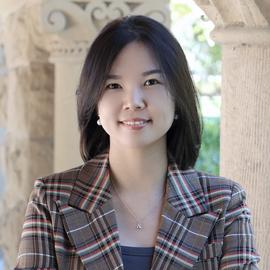
Hi! I am Luwen, a Postdoctoral Fellow working with Dr. Kate Maher in the Department of Earth System Science at Stanford University. My research focuses on mapping beaver wetland complexes and quantifying beaver-induced water storage, with funding from the Stanford Institute for Human-Centered Artificial Intelligence and the Stanford Woods Institute for the Environment. I received my Ph.D. in Earth and Environmental Science from Michigan State University, where I worked on nutrient transport modeling across the Great Lakes Basin and agricultural tile drainage mapping across the US Midwest region at MSU Hydrogeology Lab.
If you want to collaborate on research or project, please feel free to reach out! Email: luwenwan AT stanford.edu
- Nutrient Fate and Transport
- Watershed Modeling
- Machine Learning and Artificial Intelligence
- Remote Sensing and Earth Observations
- Agricultural Practice Management
- Climate adaptation and mitigation
- Nature-based Climate Solutions
- Beavers
-
PhD in Earth and Environmenntal Science, 2018 - 2023
Michigan State University
-
Visiting Student in Agricultural & Biological Engineering, 2016 - 2017
Purdue University
-
MS in Geography, 2014 - 2017
South China Normal University
-
BMgmt in Land Resource Management, 2010 - 2014
Hunan Normal University
Experience


Selected Publications
Projects